A SME Two Trouble Tails agreed to improve their website by adding analytics tool Amplitude, but I added a few more tweaks to help improve SEO and accessibility. Here is the overview of how it went
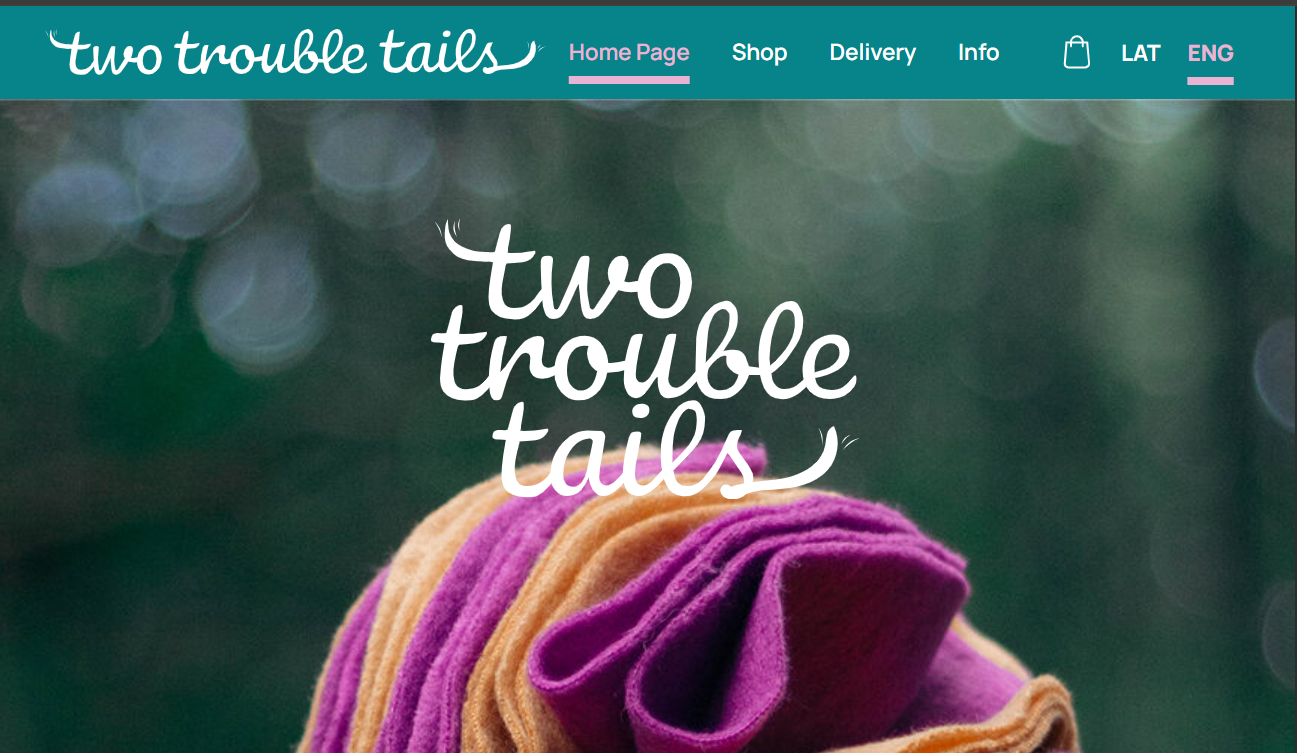 TwoTroubleTails front page screenshot
A couple of weeks ago, I posted in a Facebook group in hopes of finding someone from the SME family who doesn't mind trying out Amplitude analytics on their page. Luck was on my side and I met the wonderful owner of the small business - https://www.twotroubletails.com/ (A business focused on mindfully crafted pet enrichment activity toys by a person who themselves is studying to become a veterinarian.) Let's dive into the process!
Step 1 - Current state evaluation
After an introductory meetup and acquiring login information to the website's builder, I was all set for the work ahead. I started with understanding the current state of the page's SEO, accessibility and GDPR compliance, and introducing myself with the capabilities of the website's builder platform - Mozello.
GDPR compliance
Privacy policy regarding personal data processing and storing from order information was clearly stated and cookie checkers approved the known truth - there are no marketing, advertisement, analytical or any other non-essential cookies on the website.
One of multiple cookie checkers used for initial cookie assesment
The only flaw in privacy policy - it contained disclaimer for the use of all types of cookies, including Google Analytics for data analytics purposes, which was not true, as well as containing chapter for using incognito browsing or third-party tools to disable non-essential cookies or ads (again - neither were present in the website)
Verdict: Privacy policy needs updates, but no issues with GDPR compliance.
Accessibility check
AccessScan accessibiity score scan for initial assessment
Accessibility check revealed a slightly worse image, issues with compliance with the following items:
- Lack of "Back to Top" button
- Missing alt values for images
- Missing
or
for better readability
- Missing some aria values on links that open in a new page
- Colour contrast issues
Verdict: Accessibility needs updates, but colour contrast can be difficult to update as colour scheme is part of the brand's identity.
SEO evaluation
It was quite straightforward - the website is relatively new and does not have a lot of content, meaning it is rather difficult to rank for good search positions on queries that don't contain the brand name.
For Two Trouble Tails, the main focus for SEO practices would be to follow the best practice guides and optimise as much as possible, considering customisation constraints of Mozello and the limited content available on the page, as well as using any and all additional vehicles that could boost organic visibility.
Verdict: Is potential for improvement, but considering limitations, the result will be less than ideal.
Customer analytics tool
The current state evaluation was simple - there isn't any. Providing me with the freedom to implement an analytics solution from 0.
Verdict: Analytics tool implementation needed - perfect for portfolio project.
Step 2 - Fast wins, slow growth
To continue with real hands-on work, I connected with the website's owner to inform them about the potential actions that will need to be taken in order to improve the website. And for expectation management, I did inform about the potential limitations that the page will have, not necessarily being an issue right now, but rather something to think about in the future. Let's dive into how the fixes went!
Analytics tool of choice - Amplitude
While the most popular choice for small business owners is Google Analytics, I went with Amplitude for two reasons:
Personal need - want to understand how Amplitude differ from Adobe Analytics I am working with professionally, and to create it as a personal project.
The all-in-one package for business - Amplitude does provide analytics for websites but additionally provides session recording and A/B testing options, and countless integrations with other data platforms, including most popular ad providers, which is beneficial as all data can in fact be in one place for small businesses.
More about how the Amplitude implementation went, you will be able to read in the adpost coming soon.
GDPR compliance improvements
With Amplitude implementation comes the need to add a cookie banner. Mozello provides an automatic add-on for this purpose. It has severely limited customisation options, and some of the accessibility checkers do not like the said cookie banner (we will get to this issue in the next chapter), but overall, it has easy-to-understand and configure functionality.
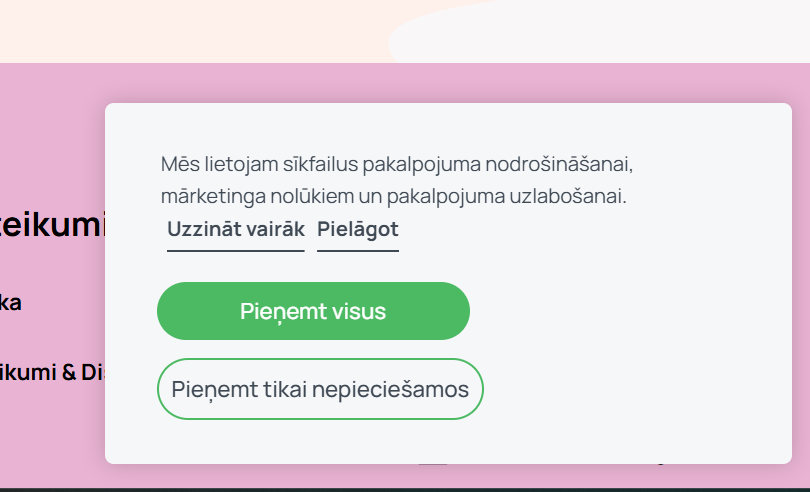
Cookie banner as-is in Latvian (the language adjusts depending on website's languge)
Mozello allows customisation of the cookie banner slightly - adding a custom destination for the links, custom text for the cookie banner and custom names of the buttons/links. But the design of it cannot be adjusted. Additionally, the cookie banner automatically sets the "Remove cookies" item in the footer:
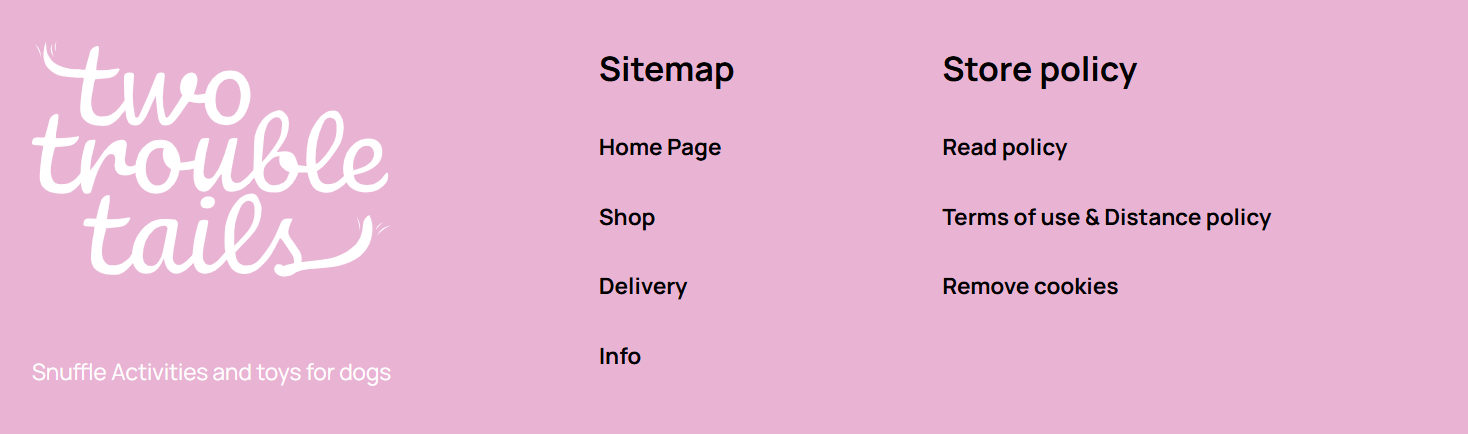 "Remove cookies" (highlighted) in Two Trouble Tails footer
This option allows the visitor to freely remove cookies and re-trigger the cookie banner at will without the need to clear browser cookies by different means. When the cookie banner was set up, I checked if it functions correctly and with a specific HTML tag in the analytics tool tag it did.
After the cookie banner was set up, came the turn for privacy policy tweaks. Now it correctly informs about what type of cookies are in use, what kind of information is collected and how to remove cookies and avoid trackers.
If the privacy policy is renewed whenever new cookies or data collection tools are implemented, the general GDPR compliance for the website is reached.
Accessibility - mandatory, not optional
In June 2025, the EEA (European Accessibility Act) comes into full force, and websites need to be adjusted to abide by the new rules to increase internet accessibility and avoid penalties.
Some parts of accessibility features do overlap with SEO best practices. Namely - good readability, clear heading tag use and alt text use for images.
The first issue to tackle was the lack of alt texts. It was mainly prevalent in one section - the home page, the Instagram image gallery. It turned out that while Mozello automatically assign alt texts to product images and displays a separate field for alt text writing for the rest of the in-page images, gallery view is special - unless you have titles for all images on hover, there are no alt texts. Overall, an easy fix.
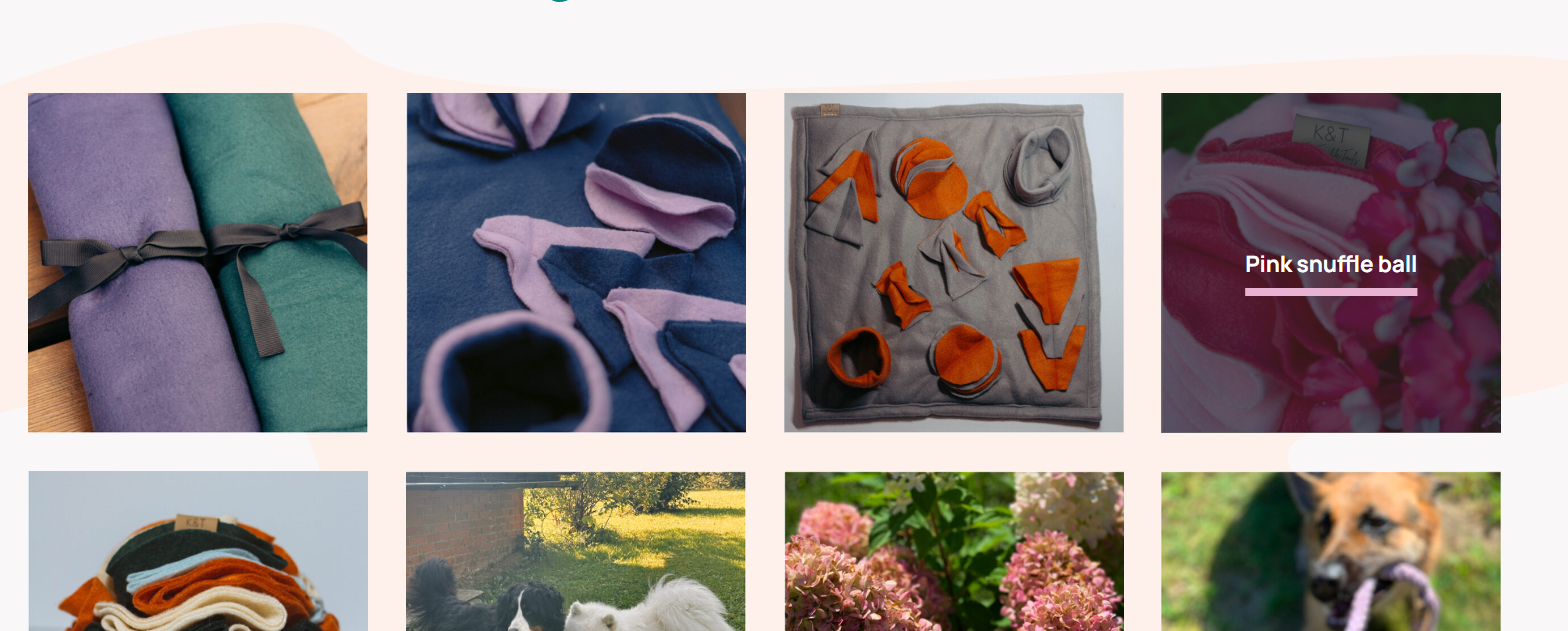
The gallery view with display of image title on hover for "Pink snuffle ball"
The next item to check - scroll to the top button, which also aids a visually impaired internet experience, easing the navigation. Also, for this feature, Mozello has been helpful - there is another built-in feature that enables the back to top button in the brand's main colour.
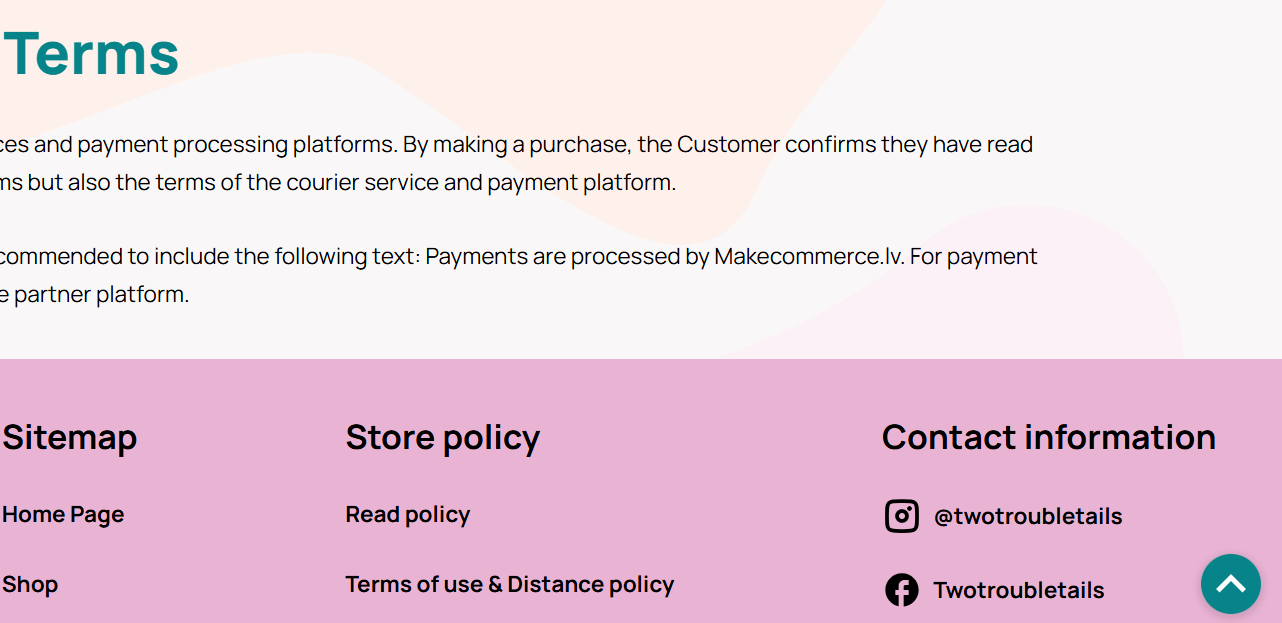
Screenshot with the "Scroll back to top" button visible in the lower right corner
The next task was to tackle the heading issue, there were two in fact - headings without content and pages with more than one H1 tag.
While not every single place where h1 was multiplied could be fixed (mainly the situation with SVG logo in the footer and other placements, which, for unknown reason, had the h1 tag). The rest of the placements and empty tags were fixed accordingly - either by demoting the heading level or by deleting the empty heading tag.
The last and the biggest issue - colour contrast being too low - I haven't been able to fix on my own, as this requires the website owner to agree to a new colour being used for the links at least. While the advice has been made, the action is pending.
What can be optimised for search?
Now I have arrived at the last topic for the Two Trouble Tails I was assigned to do - SEO. The initial state after tackling the accessibility topic was decent. As previously mentioned, the website at the moment does not feature a lot of content, therefore limiting the ability to optimise for search engines. But let's see what was done:
- Adding meta title, description, and URL slug to products for better product page performance in the search results
- Formatted the product description to include an h2 heading and visually break down the text where applicable
- Registered the ownership of twotroubletails.com in Google Search Console and Bing Webmaster Tools, adding a sitemap for faster website discovery and indexing
- Registered website for the Google Merchant service to ensure organic product listing and store listing on search. (Note: some configuration is still pending, especially for the delivery and returns policy. It is aimed to be finished by June 2025.)
- Keyword research and suggestions to the website owner for future content additions on the page.
Conclusion
The task has been fun and at the same time challenging, especially the accessibility part. Due to the website being new and comparably small with nearly 0 traffic, the tasks done have been more about the initial best practice implementation and advising the owner on what steps should be taken in the future to ensure that all topics are covered accordingly.
Currently I have agreed to have access to the platforms for additional couple weeks, as it would allow to create better data views in analytics tools (hopefully more traffic comes to the website) and potentially help to set up the ad provider platforms if during the monitoring period the owner decide to give the ads a go.
Overall, it has been a great exercise to apply current knowledge on a new project unrelated to my direct professional ecosystem.
Thank you, Two Trouble Tails, for giving me the chance to improve your website!